Write a review
Compare
Sound and battery
  • 1DD Driver configuration
  • 24 Ohms Impedance
  • 3.5 mm Connector type
Add to comparison

About the model

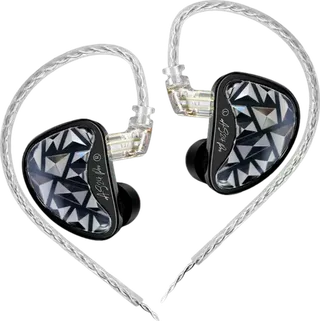
The KZ EDX Pro is a pair of in-ear monitors released in 2025, with one dynamic driver per ear and LCP diaphragms in 3D-printed resin shells.

At 24 Ohms and 112 dB/mW it reaches a loud level from a phone or a small dongle, without extra amplification. The 10 Hz to 20 kHz range keeps low bass and high detail audible. The 1.25 m OFC cable detaches at a 0.75 mm two-pin joint; a 3.5 mm plug, in-line mic and controls let you take calls. Fits commuting, laptop listening and casual monitoring.

Overview

Cable
General info
Specifications

Often compared with

5.9
Compare
To favorites
4.6
Compare
To favorites
5.8
Compare
To favorites
5.8
Compare
To favorites
3.8
Compare
To favorites
5.1
Compare
To favorites
5.8
Compare
To favorites
4.2
Compare
To favorites
4.3
Compare
To favorites
7.0
Compare
To favorites

General info

Specifications
Driver configuration
1DD
Type of drivers
Dynamic driver (DD)
Diaphragm material
Liquid crystal polymer (LCP)
Shell material/process
3D-printed resin
Built-in microphone
Yes
In-line control panel
Yes

Specifications

Specifications
Drivers count
2
Impedance
24 Ohms
Lowest frequency
10 Hz
Highest frequency
20,000 Hz
Sound pressure level
112 dB/mW

Cable

Specifications
Connector type
3.5 mm
Pin connector
2-Pin (0.75 mm)
Cable material
Oxygen-free copper (OFC)
Cable length
1.25 m
Detachable cable
Yes

Owner reviews

Share your experience with KZ EDX Pro! It takes a couple of minutes and helps others choose.
Reviews (3)
  • Kasiran L.
    10/10
    10/10
    • Comfort: 9/10
    • Microphone quality: 8/10
    • Battery life: 10/10
    • Sound quality: 9/10
    • Noise isolation: 7/10
    Didn't expect it at this price
    Just realized that 24 ohm plus 112 dB/mW makes the EDX Pro really loud on an ordinary phone - 30-40 percent volume is already more than enough and nothing sounds sluggish at all. My only gripe is the 2-pin 0.75 mm socket, it's kind of fussy when you swap cables, you have to push it in perfectly straight, and the treble above 10 kHz does go up a little, but tbh for me that just makes vocals and hi-hats easy to pick out. The LCP diaphragm keeps the bass quick and never bloated, the 1.25 m OFC cable doesn't rustle against your clothes either, so for friends who are just getting into IEMs I'd recommend this without hesitating.
    Pros
    • Easy to drive straight from a phone, no dongle
    • Quick bass, the LCP diaphragm shows
    • OFC cable has minimal microphonics
    Cons
    • 2-pin 0.75 mm socket is fussy when fitting a cable
    • Treble is a bit lifted on bright recordings
  • John Mendoza
    3/10
    3/10
    • Comfort: 3/10
    • Microphone quality: 5/10
    • Battery life: 5/10
    • Sound quality: 4/10
    • Noise isolation: 3/10
    Two units, two problems
    First pair had a channel imbalance I could actually measure. Left side was about 3 dB down around 1 kHz. The right 2-pin 0.75 socket wouldn't hold the cable straight, however I seated it. Store swapped it without much fuss, fair enough. The replacement didn't make up for it like I hoped. At 24 ohms and 112 dB/mW it hisses on every dongle I own. The single LCP dynamic driver still has a spike somewhere near 5-6 kHz, and cymbals go harsh 😤. Shells are 3D resin and look fine. The 1.25 m OFC cable is a sensible length for a desk. Inline mic and button handle calls without drama. Fit is the main problem. The nozzle angle pushes the tip into my canal after 40 minutes. Then I have to pull them out and lose whatever I was listening to. For this money the tuning should at least be consistent from unit to unit, not hit or miss. So back they go if the second pair doesn't settle in.
    Pros
    • 3D resin shells feel solid in the hand
    • Mic and button on the cable do their job on calls
    • Store did the exchange with no hassle
    Cons
    • Channel imbalance you can measure right out of the box
    • 2-pin 0.75 socket is awkward and feels loose
    • Nasty spike around 5-6 kHz, tiring to listen to
    • Starts to hurt after 40 minutes
  • Nico C.
    9/10
    9/10
    • Comfort: 9/10
    • Microphone quality: 7/10
    • Battery life: 10/10
    • Sound quality: 9/10
    • Noise isolation: 6/10
    Made a spreadsheet before buying these and it worked out
    Before buying, I put together a spreadsheet with the 24-ohm impedance and 112 dB/mW written next to everything I was comparing, since I wanted something that sounded decent straight off a phone with no dongle, and those two figures already told me I wouldn't need an amp at all. Then there's the single driver's LCP diaphragm, which is what explains the quick attack and keeps the bass from turning to mush when a track is packed with sub-bass, plus the quoted 10 Hz to 20 kHz range, which in practice means there's genuine information down low even if I can't hear a thing at 20 kHz, let's be realistic. The 3D-printed resin shell weighs barely anything, and after two hours I forget I'm wearing them; the 1.25 m OFC cable is plenty for laptop and pocket use, and the detachable 0.75 mm 2-pin connector is the reason I bought them, though I'll admit it feels more delicate than I'd like every time I swap the cable. I use the inline remote with mic for work and people hear me clearly; it's no podcast mic but it does the job, and with the right tips the passive isolation takes care of a good chunk of tram noise. The only thing that bugs me is that on badly mastered recordings the treble gets a bit spiky and I have to drop the volume two steps; I haven't felt the need to touch the EQ. For what I paid, I can't find anything that sounds like this without spending twice as much, so they're staying
    Pros
    • Runs from any phone, 24 ohms and 112 dB/mW
    • Fast, controlled bass thanks to the LCP diaphragm
    • Detachable 1.25 m 2-pin cable is very practical
    • Light 3D resin shell for long sessions
    Cons
    • 0.75 mm connector is delicate when swapping cables
    • Treble that gets spiky on bright masters