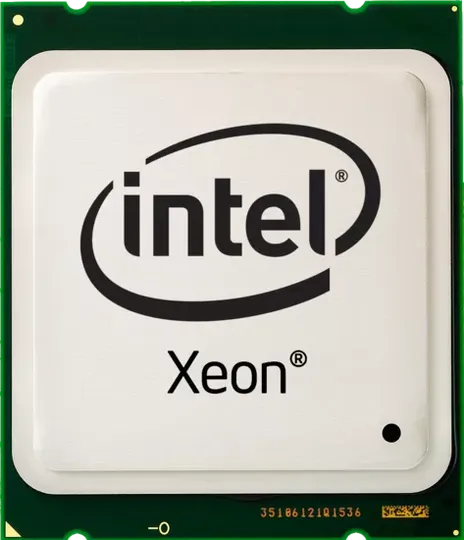
Intel Xeon E5-2690
3.2
Server processors

Intel Xeon E5-2690

Write a review
Compare
Performance
  • 32 nm Semiconductor size better than 4%
  • 16 threads CPU threads better than 33%
  • 8 × 2.9 GHz Total clock speed better than 36%
Performance
PassMark result
14,663
PassMark result (single)
1890
All benchmarks
Add to comparison

About the model

The Intel Xeon E5-2690 is a server processor released in 2012. It runs 16 threads with a turbo clock speed of 3.8 GHz, and a 20 MB L3 cache holds frequently used data close to the cores.

Four memory channels carry up to 384 GB of DDR3 memory at 1600 MHz, and ECC support lets the system detect and correct memory errors. Thermal design power is 135 W, so it needs a capable cooler. It suits multi-threaded server work such as virtualization and database hosting.

Overview

Memory
Features
Benchmarks
Performance
General info

Often compared with

8.3
Compare
To favorites
7.9
Compare
To favorites
8.1
Compare
To favorites
7.8
Compare
To favorites
6.7
Compare
To favorites
7.3
Compare
To favorites
7.5
Compare
To favorites
6.6
Compare
To favorites
6.1
Compare
To favorites
6.7
Compare
To favorites

Intel Xeon E5-2690 prices

Prices are updated daily and may differ from the shop. We may earn a commission from purchases.

Benchmarks

Benchmark results
PassMark result
14,663
Better than 17% of the category
PassMark result (single)
1890
Better than 32% of the category

General info

Specifications
Thermal Design Power (TDP)
135 W
Release date
1 Mar 2012
Semiconductor size
32 nm
PCI Express (PCIe) version
3
CPU temperature
72 °C
Integrated graphics
No
Number of transistors
2270 million
Supports 64-bit
Yes

Performance

Specifications
CPU threads
16 threads
Turbo clock speed
3.8 GHz
L3 cache
20 MB
L1 cache
512 KB
L2 cache
2 MB
L2 core
0.25 MB/core
Clock multiplier
29
Unlocked multiplier
No
L3 core
2.5 MB/core
Turbo Boost Technology version
2
Total clock speed
8 × 2.9 GHz

Memory

Specifications
ECC memory support
Yes
Maximum memory bandwidth
51.2 GB/s
DDR memory version
3
RAM speed (max)
1600 MHz
Maximum memory amount
384 GB
Memory channels
4
Bus transfer rate
8 GT/s

Features

Specifications
Multithreading
Yes
Instruction sets
MMX, AES, AVX, SSE 4.1, SSE 4.2
NX bit
Yes

Benchmarks

Specifications
PassMark result
14,663
PassMark result (single)
1890

Owner reviews

Rating
8.5
2 ratings
  • Value for money
    9.5
  • Performance
    8.5
  • Reliability
    10
  • Energy efficiency
    7.5
Share your experience with Intel Xeon E5-2690! It takes a couple of minutes and helps others choose.
Reviews (5)
  • William R.
    10/10
    10/10
    • Value for money: 10/10
    • Performance: 9/10
    • Reliability: 9/10
    • Energy efficiency: 6/10
    16 threads, cheaper than one GPU
    Got a matched pair for under sixty bucks shipped, and in 2026 I'm still half disbelieving what that money buys: 16 threads on each chip, 20MB of L3, and 51.2 GB/s of memory bandwidth over four DDR3 channels. It's the bandwidth figure that floored me, my old desktop had two channels and half that rate, and right now four VMs plus a database run side by side with nothing choking. PassMark gives roughly 14663 multi and 1890 single, which lays out both the win and the loss, lovely for parallel work, only average when a job needs one quick core. ECC at this price is nearly unfair, I stuffed 128GB of registered DIMMs in for less than a single 32GB DDR5 stick, so the platform is dated and my wallet is thrilled. TDP is 135W and mine settles at 71-72 °C on a cheap tower cooler, which is fine, and the PCIe 3.0 lanes still carry an NVMe adapter and a 10G card with no drama. For a home lab on a tight budget nothing else comes close
    Pros
    • 51.2 GB/s on four channels for pocket change
    • ECC RDIMM support in this price range
    • 16 threads slice through parallel workloads
    Cons
    • 1890 single core is a hard stop for interactive work
    • 135W for each chip piles up in a rig running day and night
  • Rodney
    7/10
    7/10
    • Value for money: 8/10
    • Performance: 7/10
    • Reliability: 8/10
    • Energy efficiency: 4/10
    Two weeks on a used dual socket board, and the research was worth it
    Before pulling the trigger on a pair of these I spent around three weeks working through forum threads, mostly to figure out whether 2012 silicon still makes any sense, and so far the answer is a cautious yes. The board is a used dual socket LGA2011 unit off eBay, 64GB of registered DDR3 spread over four channels per chip, and the whole combo came in under the price of a single modern consumer CPU. Windows reports 32 threads and 64GB and that alone had me grinning 😄 It feeds my Plex server, a couple of VMs and a Handbrake queue with no strain at all, and the 20MB of L3 really does show once several containers run together, they stop tripping over each other. What I did not expect was how stable it is, no odd stutter, no random reboots, ECC still coming back clean. The heat was no surprise, each chip has a big Noctua on it and I am still in the high 60s under sustained load with one pegged, and I have not even tried both at full tilt in a warm room. The whole box idles near 90W and climbs past 300W when I actually use it, so power is a proper line item, not something you round off. Single thread is where the age shows, my old i5 opens apps quicker and anything stuck on one core feels sluggish next to it. For the money I paid and what I run on it, it was worth it
    Pros
    • 32 threads for what a mid range consumer chip costs
    • quad channel ECC DDR3 costs almost nothing at the moment
    • runs Plex plus a pile of VMs with no stutter
    Cons
    • 135W TDP and the real draw sits above the spec
    • single core speed is poor by today's standards
    • LGA2011 boards are getting scarce and more expensive
    2 replies
    • Jonathan White
      The detail I keep coming back to is that you bought two of them. Two 135W chips, a dual-socket board that costs more than the CPUs, and a cooler budget that would cover a whole modern system. Mine ran Plex beautifully for a while, until I calculated the yearly electricity cost and realized I had paid for the server twice. PCIe 3.0 lanes are fine as long as you only want a couple of NVMe drives; beyond that you end up chasing a bifurcation card priced like the motherboard. It is a great chip for the money, the same way an old SUV is a great car for the money.
    • Jonathan White
      Let me address your points one by one. First, idle power: my setup on a single socket board with a Platinum PSU drew 78W, so 90W sounds plausible, but it's that 300W under load that makes a 24/7 machine genuinely expensive to run. Second, heat: 72 °C is the Tcase limit and a Noctua should keep you comfortably under that 😅 so I'd double-check the mounting before pointing fingers at the CPU. Third, single-thread performance: a PassMark of 1890 isn't subjective, it's exactly why I quit using mine for anything interactive, a current i3 beats it hands down. Fourth, registered DDR3 prices have been climbing since everyone started homelabbing with these, so the budget angle is disappearing. Mine ran as a NAS for two years without any trouble, but the electricity wasn't free.
  • Roberta Bonatti
    4/10
    4/10
    • Value for money: 6/10
    • Performance: 5/10
    • Reliability: 4/10
    • Energy efficiency: 3/10
    Gets the job done, though with a bunch of headaches
    Bought it used for a home server and six months in I'd say it does its job, just with a few annoyances I didn't see coming. Temps are the first problem, with a 120 mm cooler under constant load I sit at 70-72 degrees, and up in the attic during summer the fan gets irritating. The memory is only DDR3 at 1600 MHz and even if the four channels give 51.2 GB/s, finding decent registered modules today is a gamble, two of my sticks showed up faulty. The 135 W draw is noticeable on the bill, my old Xeon E3 did the same stuff on half of it. What made me keep it is the 20 MB cache and the 16 threads, it transcodes three Plex streams at the same time without a hiccup and the board with PCIe 3.0 handles a 10G card fine. I wouldn't suggest it to someone who wants a silent box or cares about power draw, but if you find it cheap and need raw power for little money it can still hold its own
    Pros
    • 16 threads and 20 MB of cache for very little money
    • four channels, plenty of memory bandwidth
    • PCIe 3.0 is still usable
    Cons
    • high temps and loud fans
    • only DDR3 1600, registered modules are hard to find
    • the 135 W TDP shows up on the bill
  • Giancarlo Genugu
    8/10
    8/10
    • Value for money: 10/10
    • Performance: 8/10
    • Reliability: 10/10
    • Energy efficiency: 8/10
    The Intel Xeon is stronger in a few areas
    it's a good, powerful chip, but you have to hunt down the right adapters. And for editing it isn't the top pick.
    Pros
    • powerful enough to handle games even though it's a 2011 part
    • it has more cores
    Cons
    • pulls a lot of power
    • not the best for editing
  • KAMT_ csgo
    9/10
    9/10
    • Value for money: 9/10
    • Performance: 9/10
    • Reliability: 10/10
    • Energy efficiency: 7/10
    Great processor for gaming and for getting work done