6.9
Mini PCs

Dell Pro Max

Write a review
Compare
  • Faster than 89% of mini PCs
  • 138 specs
Key specs
  • 512 GB SSD storage capacity better than 30%
  • 32 GB RAM better than 28%
  • 20 threads CPU threads better than 67%
Performance
PassMark result
48,917
PassMark result (single)
4633
Cinebench R20 (multi) result
10,181
All benchmarks
Add to comparison

About the model

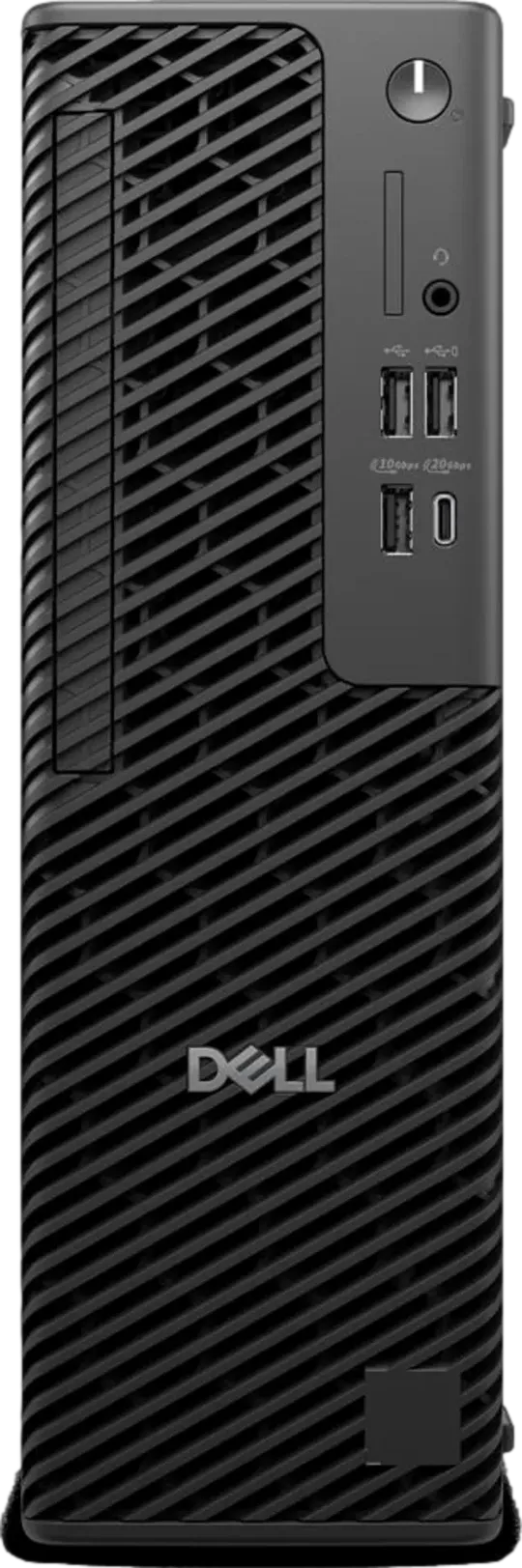
The Dell Pro Max is a compact desktop computer from Dell, released in 2025.

It holds 32 GB of DDR5 memory at 5600 MHz, so many programs and large files stay open together. A 512 GB NVMe SSD loads the system quickly, and 16 GB of graphics memory with a DisplayPort 2.1 output drives detailed images on high-resolution monitors. Four USB-A and one USB-C port run at USB 3.2 Gen 2 speed.

It suits desk-based office work and multi-monitor setups.

Overview

CPU
Graphics card
Memory
Benchmarks
Connectivity
General info
Why Dell Pro Max is better than average
  • Width
    79.3 mm
    better than 97%
  • VRAM
    16 GB
    better than 96%
  • USB 3.2 Gen 2x2 ports
    1
    better than 99%
  • USB 3.2 Gen 2 ports (USB-A)
    4
    better than 92%
  • Effective memory speed
    16,000 MHz
    better than 82%
  • USB 3.2 Gen 1 ports (USB-A)
    2
    better than 76%
  • Cinebench R20 (single) result
    847
    better than 99%
  • PassMark result (single)
    4633
    better than 98%
All specifications

Often compared with

10.0
Compare
To favorites
7.9
Compare
To favorites
6.9
Compare
To favorites
6.9
Compare
To favorites
6.8
Compare
To favorites
6.8
Compare
To favorites
7.6
Compare
To favorites
7.7
Compare
To favorites

Benchmarks

Benchmark results
PassMark result
48,917
Better than 89% of the category
PassMark result (single)
4633
Better than 98% of the category
Cinebench R20 (multi) result
10,181
Better than 95% of the category
Cinebench R20 (single) result
847
Better than 99% of the category

General info

Specifications
SSD storage capacity
512 GB
Form factor
Micro-ATX
Release date
15 Oct 2025
NVMe
Yes
Thickness
178 mm
Height
206 mm
Width
79.3 mm
Volume
2,907.77 cm³

CPU

Specifications
Thermal Design Power (TDP)
from Nvidia RTX 2000 ADA Generation
70 W
Turbo clock speed
from Intel Core Ultra 7 265
5.3 GHz
CPU threads
from Intel Core Ultra 7 265
20 threads
Multithreading
from Intel Core Ultra 7 265
No
Has integrated graphics
from Intel Core Ultra 7 265
Yes
CPU speed
from Intel Core Ultra 7 265
8 x 2.4 & 12 x 1.8 GHz

Graphics card

Specifications
VRAM
from Nvidia RTX 2000 ADA Generation
16 GB
Floating-point performance
from Nvidia RTX 2000 ADA Generation
12 TFLOPS
Effective memory speed
from Nvidia RTX 2000 ADA Generation
16,000 MHz
GPU clock speed
from Nvidia RTX 2000 ADA Generation
1620 MHz
GPU memory speed
from Nvidia RTX 2000 ADA Generation
2000 MHz
GPU turbo
from Nvidia RTX 2000 ADA Generation
2130 MHz
Texture rate
from Nvidia RTX 2000 ADA Generation
187.4 GTexels/s
Pixel rate
from Nvidia RTX 2000 ADA Generation
102.2 GPixel/s
Ray tracing
from Nvidia RTX 2000 ADA Generation
Yes
DLSS
from Nvidia RTX 2000 ADA Generation
No
Maximum memory bandwidth
from Nvidia RTX 2000 ADA Generation
224 GB/s
Memory bus width
from Nvidia RTX 2000 ADA Generation
128-bit
PCI Express (PCIe) version
from Nvidia RTX 2000 ADA Generation
4
Texture mapping units (TMUs)
from Nvidia RTX 2000 ADA Generation
88
Shading units
from Nvidia RTX 2000 ADA Generation
2816
Render output units (ROPs)
from Nvidia RTX 2000 ADA Generation
48
DirectX version
from Nvidia RTX 2000 ADA Generation
DirectX 12
OpenGL version
from Nvidia RTX 2000 ADA Generation
4.6
OpenCL version
from Nvidia RTX 2000 ADA Generation
3
Semiconductor size
from Nvidia RTX 2000 ADA Generation
5 nm
Supported displays
from Nvidia RTX 2000 ADA Generation
4
Double Precision Floating Point (DPFP)
from Nvidia RTX 2000 ADA Generation
Yes
Number of transistors
from Nvidia RTX 2000 ADA Generation
18,900 million
Supports multi-display technology
from Nvidia RTX 2000 ADA Generation
Yes
Has RGB lighting
from Nvidia RTX 2000 ADA Generation
No
Has LHR
from Nvidia RTX 2000 ADA Generation
No

Memory

Specifications
RAM
32 GB
RAM speed
5600 MHz
DDR memory version
5

Connectivity

Specifications
Wi-Fi connectivity
No
Bluetooth
No
USB 2.0 ports
0
USB 3.2 Gen 2 ports (USB-A)
4
USB 3.2 Gen 1 ports (USB-A)
2
USB 3.2 Gen 2 ports (USB-C)
1
USB 4 40Gbps ports
0
USB 4 20Gbps ports
0
USB 3.2 Gen 2x2 ports
1
USB 3.2 Gen 1 ports (USB-C)
0
Thunderbolt 4 ports
0
Thunderbolt 3 ports
0
DisplayPort version
DisplayPort 2.1
DisplayPort outputs
1
HDMI version
HDMI 2.1
HDMI ports
1
RJ45 ports
0
3.5mm audio jack
Yes
VGA connector
No
DVI outputs
from Nvidia RTX 2000 ADA Generation
0
Has S/PDIF Out port
No

Benchmarks

Specifications
PassMark result
from Intel Core Ultra 7 265
48,917
PassMark result (single)
from Intel Core Ultra 7 265
4633
Cinebench R20 (multi) result
from Intel Core Ultra 7 265
10,181
Cinebench R20 (single) result
from Intel Core Ultra 7 265
847
Base power draw
from Intel Core Ultra 7 265
65 W
AI accelerator performance
from Intel Core Ultra 7 265
13 TOPS
RAM speed (max)
from Intel Core Ultra 7 265
6,400 MHz

Other

Specifications
Has an external memory slot
No
Maximum memory amount
from Intel Core Ultra 7 265
192GB
Has air-water cooling
from Nvidia RTX 2000 ADA Generation
No
Uses big.LITTLE technology
from Intel Core Ultra 7 265
Yes
Chip construction
from Intel Core Ultra 7 265
Single core chiplet
Chipset
from Intel Core Ultra 7 265
Z890
CPU socket
from Intel Core Ultra 7 265
LGA 1851
Type
from Intel Core Ultra 7 265
Desktop
Uses flash storage
No
GDDR version
from Nvidia RTX 2000 ADA Generation
GDDR6
GPU architecture
from Nvidia RTX 2000 ADA Generation
Ada Lovelace
Has an HDMI output
from Nvidia RTX 2000 ADA Generation
No
Instruction sets
from Intel Core Ultra 7 265
MMX, F16C +6 , FMA3, AES, AVX, AVX2, SSE 4.1, SSE 4.2
Length
from Nvidia RTX 2000 ADA Generation
168 mm
Peak power draw
from Intel Core Ultra 7 265
182 W
Memory channels
from Intel Core Ultra 7 265
2
Supports ECC memory
from Nvidia RTX 2000 ADA Generation
Yes
Mini DisplayPort outputs
from Nvidia RTX 2000 ADA Generation
4
Has NX bit
from Intel Core Ultra 7 265
Yes
PCIe lanes
from Nvidia RTX 2000 ADA Generation
8
USB-C ports
from Nvidia RTX 2000 ADA Generation
0
Power connector
from Nvidia RTX 2000 ADA Generation
None (slot-powered)
Ray tracing cores
from Nvidia RTX 2000 ADA Generation
22
AMD SAM / Intel Resizable BAR
from Nvidia RTX 2000 ADA Generation
Intel Resizable BAR
Hardware security enclave
from Intel Core Ultra 7 265
Firmware TPM
Supports 3D
from Nvidia RTX 2000 ADA Generation
Yes
Tensor cores
from Nvidia RTX 2000 ADA Generation
88
Has XeSS (XMX)
from Nvidia RTX 2000 ADA Generation
No

Owner reviews

Share your experience with Dell Pro Max! It takes a couple of minutes and helps others choose.
Reviews (1)
  • Андроник К.
    9.5/10
    9.5/10
    • Value for money: 8/10
    • Ease of use: 10/10
    • Performance: 10/10
    • Reliability: 9/10
    • Build quality: 9/10
    Bought it for 1440p and photos
    1440p in games plus piles of RAW files in Lightroom: 20 threads with turbo up to 5.3 GHz and 32 GB at 5600 MHz run it all with no stutter, and the 512 GB NVMe takes the system and the projects :D
    Pros
    • 20 threads, batch RAW export runs steady with no dips
    • DDR5-5600 32 GB, browser with a dozen tabs and the editor at the same time, no swap
    • DisplayPort 2.1 and HDMI 2.1, two monitors with no adapters
    Cons
    • 512 GB is not much, an external SSD is pretty much a must
    • No Thunderbolt 4, so no single-cable dock
    1 reply
    • Ilsa O.
      @Андроник К. The numbers in the review aren't wrong. Only the 'tanpa frit' claim needs clarifying. Order goes like this: 5.3 GHz is turbo, not daily all-core clock. At 70 W TDP, long render loads will definitely make frequency drop after a few minutes. The first 20-30 minutes aren't the fifth hour. Second, 20 threads do help Lightroom export. At 1440p gaming, the graphics card still decides, not core count. Third, monitors: DisplayPort 2.1 and HDMI 2.1 are there. But that's only two outputs. A third monitor needs another path, and Thunderbolt 4 or USB4 40Gbps aren't on this unit. If the plan is single-cable docking, rethink it from the start. The rest, 32 GB DDR5 and NVMe 512 GB, I agree that's already right for photo work.