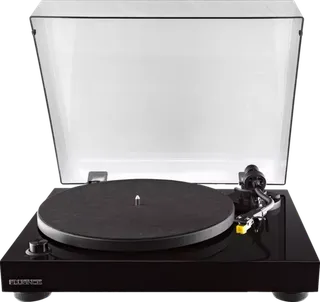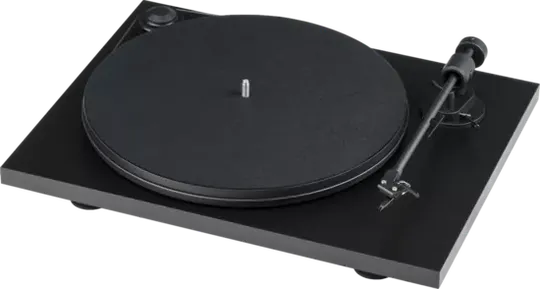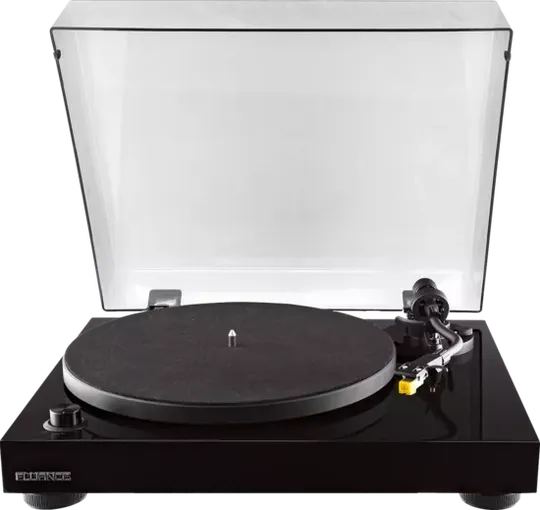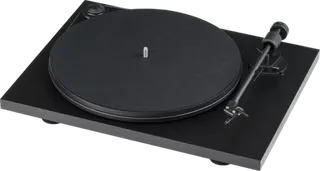
Pro-Ject Primary E vs Fluance RT80: which is better?

Add a third product

Winner: Fluance RT80

Wins 3 of 4 areas

Who should buy the Primary E?

  • Stronger cartridge
  • Cartridge frequency (high): 22,000 Hz
  • Newer model

Who should buy the RT80?

  • Stronger specifications
  • Stronger features
  • Tonearm shape: S-shape

Who leads by area

Area score out of 100: how close each product is to the best value in every spec, weighted by how much buyers care.

Primary ERT80
  • 81 Design 99
  • 90 Specifications 100
  • 100 Cartridge 86
  • 85 Features 100
  • Tonearm shape
    Primary EStraight RT80S-shape
  • Auto-stop
    Primary ENo RT80Yes
  • Built-in preamp
    Primary ENo RT80Yes
  • Wow and flutter
    Primary E0.27% RT800.2%
    −0.07% vs Primary E
  • Signal-to-noise ratio (SNR)
    Primary E65 dB RT8067 dB
    +2 dB vs Primary E
  • Cartridge frequency (high)
    Primary E22,000 Hz RT8020,000 Hz
    +2000 Hz vs RT80

Best prices

Prices are updated daily and may differ from the shop. We may earn a commission from purchases.

Pro-Ject Primary E
Fluance RT80from $249

Overview

Why is it better?
Pro-Ject Primary E wins in 5 specs
  • Cartridge frequency (high)
    22,000 Hz
    vs 20,000 Hz
  • Channel separation
    20 dB
    vs 18 dB
  • Height
    112 mm
    vs 140 mm
  • Thickness
    330 mm
    vs 349 mm
  • Weight
    4000 g
    vs 5000 g
Fluance RT80 wins in 6 specs
  • Tonearm shape
    S-shape
    vs Straight
  • Auto-stop
    Yes
    vs No
  • Built-in preamp
    Yes
    vs No
  • Wow and flutter
    0.2%
    vs 0.27%
  • Signal-to-noise ratio (SNR)
    67 dB
    vs 65 dB
  • Width
    419 mm
    vs 420 mm
All specifications side by side
Comparexo score
3.2
Overall score
5.4
Winner
Design
Specifications
Cartridge
Features

6.3 points
2.5 points
4.2 points
3.3 points
8.3 points
2.9 points
2.9 points
6.7 points

Sound and battery

What matters most

No differences in this section

Weight
4000 g
5000 g

Design

Specifications

No differences in this section

Drive type
Belt drive
Belt drive
Platter material
Unknown
Aluminum
Tonearm material
Aluminum
Aluminum
Tonearm shape
Straight
S-shape
Width
420 mm
419 mm
Height
112 mm
140 mm
Thickness
330 mm
349 mm
Weight
4000 g
5000 g
Volume
15,523.2 cm³
20,472.34 cm³

Specifications

Specifications

No differences in this section

Wow and flutter
0.27%
0.2%
Signal-to-noise ratio (SNR)
65 dB
67 dB
USB output
No
No
Bluetooth
No
No
Record speeds
45, 33 1/3
45, 33 1/3

Cartridge

Specifications

No differences in this section

Cartridge
Ortofon OM NN
Unknown
Cartridge type
Moving magnet (MM)
Moving magnet (MM)
Channel separation
20 dB
18 dB
Cartridge frequency (low)
20 Hz
20 Hz
Cartridge frequency (high)
22,000 Hz
20,000 Hz

Features

Specifications

No differences in this section

Release date
1 Oct 2018
1 Mar 2016
Built-in preamp
No
Yes
Anti-skating
Yes
Yes
Auto-start
No
No
Auto-stop
No
Yes
Auto-return
No
No
45 adapter
Yes
Yes

Winner: Fluance RT80

5.4

Fluance RT80 is better in 3 of 4 areas: it leads on the specs buyers care about most, and by a wider margin.

Tonearm shape

S-shape vs Straight

Auto-stop

Yes vs No

Built-in preamp

Yes vs No

Wow and flutter −0.07%

0.2% vs 0.27%

Signal-to-noise ratio (SNR) +2 dB

67 dB vs 65 dB

Width −1 mm

419 mm vs 420 mm