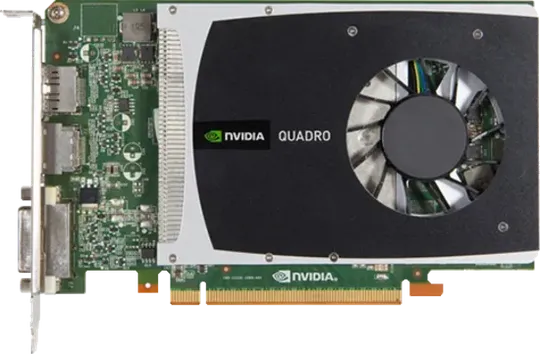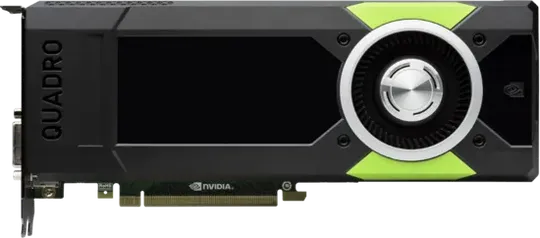
Nvidia Quadro 2000 vs Nvidia Quadro M5000: which is better?

Add a third product

Winner: Nvidia Quadro M5000

Wins 5 of 5 areas

Who should buy the Quadro 2000?

  • Lower price

Who should buy the Quadro M5000?

  • Stronger performance
  • Stronger memory
  • Pixel rate: 55.1 GPixel/s

Who leads by area

Area score out of 100: how close each product is to the best value in every spec, weighted by how much buyers care.

Quadro 2000Quadro M5000
  • 26 Performance 100
  • 41 Memory 100
  • 75 Features 100
  • 64 Ports 100
  • 76 General info 86
  • Pixel rate Important
    Quadro 20005 GPixel/s Quadro M500055.1 GPixel/s
    ×11 vs Quadro 2000
  • VRAM Important
    Quadro 20001 GB Quadro M50008 GB
    ×8 vs Quadro 2000
  • Floating-point performance Important
    Quadro 20000.48 TFLOPS Quadro M50003.53 TFLOPS
    ×7.3 vs Quadro 2000
  • Texture rate Important
    Quadro 200020 GTexels/s Quadro M5000110.2 GTexels/s
    ×5.5 vs Quadro 2000
  • Maximum memory bandwidth
    Quadro 200041.6 GB/s Quadro M5000211.6 GB/s
    ×5.1 vs Quadro 2000
  • Shading units
    Quadro 2000192 Quadro M50002048
    ×10.7 vs Quadro 2000

Best prices

Prices are updated daily and may differ from the shop. We may earn a commission from purchases.

Nvidia Quadro 2000from $59.00
Nvidia Quadro M5000from $144

Overview

Why is it better?
Nvidia Quadro 2000 wins in 4 specs
  • Thermal Design Power (TDP)
    62 W
    vs 150 W
  • Length
    178 mm
    vs 267 mm
  • Width
    178 mm
    vs 267 mm
  • Height
    111 mm
    vs 112 mm
Nvidia Quadro M5000 wins in 22 specs
  • Pixel rate
    55.1 GPixel/s
    vs 5 GPixel/s
  • VRAM
    8 GB
    vs 1 GB
  • Floating-point performance
    3.53 TFLOPS
    vs 0.48 TFLOPS
  • Texture rate
    110.2 GTexels/s
    vs 20 GTexels/s
  • Maximum memory bandwidth
    211.6 GB/s
    vs 41.6 GB/s
  • Shading units
    2048
    vs 192
  • GPU memory speed
    1653 MHz
    vs 650 MHz
  • Number of transistors
    5200 million
    vs 1170 million
All specifications side by side
Nvidia Quadro 2000
Nvidia Quadro 2000
Nvidia
from $59.00
Nvidia Quadro M5000
Nvidia Quadro M5000
Nvidia
from $144
Winner
Comparexo score
4.1
Overall score
5.0
Winner
Performance
Memory
Features
Ports
General info

1.6 points
0.8 points
1.8 points
1.7 points
5.4 points
1.8 points
3.7 points
2.6 points
3.3 points
5.2 points

Raw power

What matters most

No differences in this section

Floating-point performance
0.48 TFLOPS
3.53 TFLOPS
VRAM
1 GB
8 GB

Performance and benchmarks

Specifications

No differences in this section

GPU clock speed
625 MHz
861 MHz
GPU turbo
Unknown
1038 MHz
Pixel rate
5 GPixel/s
55.1 GPixel/s
Floating-point performance
0.48 TFLOPS
3.53 TFLOPS
Texture rate
20 GTexels/s
110.2 GTexels/s
GPU memory speed
650 MHz
1653 MHz
Shading units
192
2048
Texture mapping units (TMUs)
32
128
Render output units (ROPs)
16
64
Double Precision Floating Point (DPFP)
Yes
Unknown
PassMark (G3D) result
943
9370
PassMark (DirectCompute) result
540
Unknown

Memory

Specifications

No differences in this section

Effective memory speed
2600 MHz
6612 MHz
Maximum memory bandwidth
41.6 GB/s
211.6 GB/s
VRAM
1 GB
8 GB
GDDR version
GDDR5
GDDR5
Memory bus width
128-bit
256-bit
ECC memory support
Unknown
Yes

Features

Specifications

No differences in this section

DirectX version
DirectX 11
DirectX 12
OpenGL version
4.3
4.5
OpenCL version
1.1
1.2
Multi-display technology
Yes
Yes
Supported displays
2
4

Ports

Specifications

No differences in this section

DisplayPort outputs
2
4
GPU architecture
Fermi
Maxwell 2.0

General info

Specifications

No differences in this section

Release date
24 Dec 2010
29 Jun 2015
Thermal Design Power (TDP)
62 W
150 W
PCI Express (PCIe) version
2
3
Semiconductor size
40 nm
28 nm
Number of transistors
1170 million
5200 million
Width
178 mm
267 mm
Height
111 mm
112 mm
Power connector
None (slot-powered)
1x 6-pin
Length
178 mm
267 mm
PCIe lanes
16
16

Winner: Nvidia Quadro M5000

Nvidia Quadro M5000 is better in 5 of 5 areas: it leads on the specs buyers care about most, and by a wider margin.

Pixel rate ×11

55.1 GPixel/s vs 5 GPixel/s

VRAM ×8

8 GB vs 1 GB

Floating-point performance ×7.3

3.53 TFLOPS vs 0.48 TFLOPS

Texture rate ×5.5

110.2 GTexels/s vs 20 GTexels/s

Maximum memory bandwidth ×5.1

211.6 GB/s vs 41.6 GB/s

Shading units ×10.7

2048 vs 192

GPU memory speed ×2.5

1653 MHz vs 650 MHz

Number of transistors ×4.4

5200 million vs 1170 million