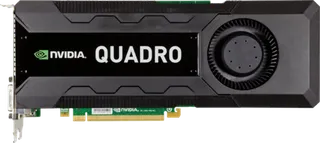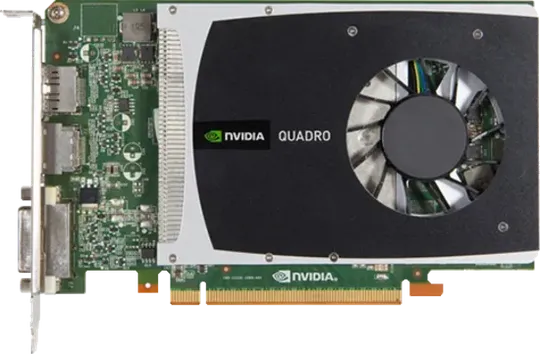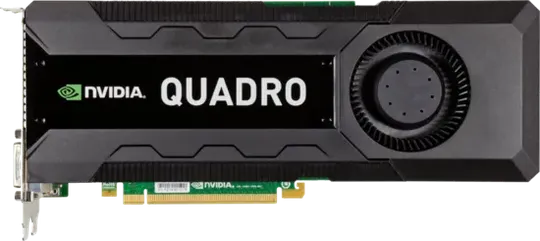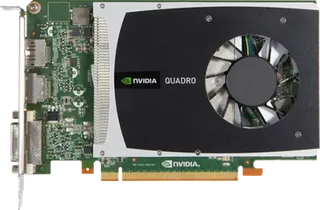
Nvidia Quadro 2000 vs Nvidia Quadro K5000: which is better?

Add a third product

Winner: Nvidia Quadro K5000

Wins 4 of 4 areas

Who should buy the Quadro 2000?

No clear advantages in this comparison.

Who should buy the Quadro K5000?

  • Stronger performance
  • Stronger memory
  • Floating-point performance: 2.17 TFLOPS

Who leads by area

Area score out of 100: how close each product is to the best value in every spec, weighted by how much buyers care.

Quadro 2000Quadro K5000
  • 40 Performance 100
  • 46 Memory 100
  • 98 Features 100
  • 83 General info 88
  • Floating-point performance Important
    Quadro 20000.48 TFLOPS Quadro K50002.17 TFLOPS
    ×4.5 vs Quadro 2000
  • Pixel rate Important
    Quadro 20005 GPixel/s Quadro K500022.6 GPixel/s
    ×4.5 vs Quadro 2000
  • VRAM Important
    Quadro 20001 GB Quadro K50004 GB
    ×4 vs Quadro 2000
  • Texture rate Important
    Quadro 200020 GTexels/s Quadro K500090.4 GTexels/s
    ×4.5 vs Quadro 2000
  • Shading units
    Quadro 2000192 Quadro K50001536
    ×8 vs Quadro 2000
  • Maximum memory bandwidth
    Quadro 200041.6 GB/s Quadro K5000173 GB/s
    ×4.2 vs Quadro 2000

Best prices

Prices are updated daily and may differ from the shop. We may earn a commission from purchases.

Nvidia Quadro 2000from $59.00
Nvidia Quadro K5000

Overview

Why is it better?
Nvidia Quadro 2000 wins in 3 specs
  • Thermal Design Power (TDP)
    62 W
    vs 122 W
  • Length
    178 mm
    vs 267 mm
  • Width
    178 mm
    vs 267 mm
Nvidia Quadro K5000 wins in 18 specs
  • Floating-point performance
    2.17 TFLOPS
    vs 0.48 TFLOPS
  • Pixel rate
    22.6 GPixel/s
    vs 5 GPixel/s
  • VRAM
    4 GB
    vs 1 GB
  • Texture rate
    90.4 GTexels/s
    vs 20 GTexels/s
  • Shading units
    1536
    vs 192
  • Maximum memory bandwidth
    173 GB/s
    vs 41.6 GB/s
  • Texture mapping units (TMUs)
    128
    vs 32
  • GPU memory speed
    1350 MHz
    vs 650 MHz
All specifications side by side
Comparexo score
4.1
Overall score
4.4
Winner
Performance
Memory
Features
Ports
General info
1.6 points
0.8 points
1.8 points
1.7 points
5.4 points
2.3 points
1.4 points
2.1 points
1.7 points
5.0 points

Raw power

What matters most

No differences in this section

Floating-point performance
0.48 TFLOPS
2.17 TFLOPS
VRAM
1 GB
4 GB

Performance and benchmarks

Specifications

No differences in this section

GPU clock speed
625 MHz
706 MHz
Pixel rate
5 GPixel/s
22.6 GPixel/s
Floating-point performance
0.48 TFLOPS
2.17 TFLOPS
Texture rate
20 GTexels/s
90.4 GTexels/s
GPU memory speed
650 MHz
1350 MHz
Shading units
192
1536
Texture mapping units (TMUs)
32
128
Render output units (ROPs)
16
32
Double Precision Floating Point (DPFP)
Yes
Yes
PassMark (G3D) result
943
4009
PassMark (DirectCompute) result
540
1869

Memory

Specifications

No differences in this section

Effective memory speed
2600 MHz
5400 MHz
Maximum memory bandwidth
41.6 GB/s
173 GB/s
VRAM
1 GB
4 GB
GDDR version
GDDR5
GDDR5
Memory bus width
128-bit
256-bit

Features

Specifications

No differences in this section

DirectX version
DirectX 11
DirectX 11
OpenGL version
4.3
4.3
OpenCL version
1.1
1.1
Multi-display technology
Yes
Yes
Supported displays
2
4

Ports

Specifications

No differences in this section

DisplayPort outputs
2
2
GPU architecture
Fermi
Kepler

General info

Specifications

No differences in this section

Release date
24 Dec 2010
17 Aug 2012
Thermal Design Power (TDP)
62 W
122 W
PCI Express (PCIe) version
2
2
Semiconductor size
40 nm
28 nm
Number of transistors
1170 million
3540 million
Width
178 mm
267 mm
Height
111 mm
111 mm
Power connector
None (slot-powered)
1x 6-pin
Length
178 mm
267 mm
PCIe lanes
16
16

Winner: Nvidia Quadro K5000

Nvidia Quadro K5000 is better in 4 of 4 areas: it leads on the specs buyers care about most, and by a wider margin.

Floating-point performance ×4.5

2.17 TFLOPS vs 0.48 TFLOPS

Pixel rate ×4.5

22.6 GPixel/s vs 5 GPixel/s

VRAM ×4

4 GB vs 1 GB

Texture rate ×4.5

90.4 GTexels/s vs 20 GTexels/s

Shading units ×8

1536 vs 192

Maximum memory bandwidth ×4.2

173 GB/s vs 41.6 GB/s

Texture mapping units (TMUs) ×4

128 vs 32

GPU memory speed ×2.1

1350 MHz vs 650 MHz