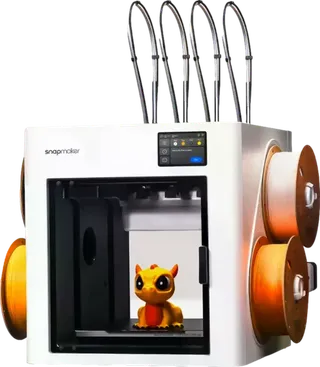
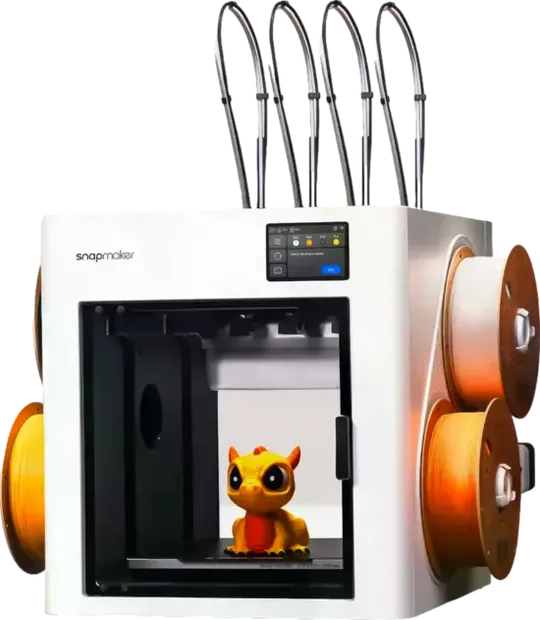
Formlabs Form 1 vs Snapmaker U1: which is better?

Add a third product

Winner: Snapmaker U1

Wins 3 of 5 areas

Comparison points count only the specs known for both products, and Form 1 has no data yet for 26 of 41. Across all specs, U1 has the higher overall Comparexo score.

Who should buy the Form 1?

  • Stronger features
  • Stronger general info
  • Width: 300 mm

Who should buy the U1?

  • Stronger components
  • Stronger materials
  • Max creation size: 270 × 270 × 270mm

Who leads by area

Area score out of 100: how close each product is to the best value in every spec, weighted by how much buyers care.

Form 1U1
  • 97 General info 50
  • 37 Components 100
  • 25 Materials 100
  • 41 Print sizes 84
  • 100 Features 17
  • Max creation size Important
    Form 1125 × 125 × 165mm U1270 × 270 × 270mm
    ×7.6 vs Form 1
  • 3D print speed
    Form 10 mm/s U1500 mm/s
    ×125,000 vs Form 1
  • Width
    Form 1300 mm U1584 mm
    −284 mm vs U1
  • Operating power consumption
    Form 160 W U1350 W
    −290 W vs U1
  • Weight
    Form 18000 g U118,200 g
    −10,200 g vs U1
  • Thickness
    Form 1280 mm U1499 mm
    −219 mm vs U1

Best prices

Prices are updated daily and may differ from the shop. We may earn a commission from purchases.

Formlabs Form 1
Snapmaker U1from $849

Overview

Why is it better?
Formlabs Form 1 wins in 6 specs
  • Width
    300 mm
    vs 584 mm
  • Operating power consumption
    60 W
    vs 350 W
  • Weight
    8000 g
    vs 18,200 g
  • Thickness
    280 mm
    vs 499 mm
  • Height
    450 mm
    vs 730 mm
  • Layer thickness
    25 µm
    vs 50 µm
Snapmaker U1 wins in 5 specs
  • Max creation size
    270 × 270 × 270mm
    vs 125 × 125 × 165mm
  • 3D print speed
    500 mm/s
    vs 0 mm/s
  • Number of colors per print
    4
    vs 1
  • Lowest potential operating temperature
    0 °C
    vs 18 °C
  • Maximum operating temperature
    300 °C
    vs 28 °C
All specifications side by side
Snapmaker U1
Snapmaker U1
Snapmaker
from $849
Winner
Comparexo score
2.0
Overall score
9.0
Winner
General info
Components
Materials
Print sizes
Connectivity
Features
5.9 points
2.2 points
0.0 points
2.0 points
0.5 points
1.4 points
7.3 points
8.6 points
8.6 points
3.9 points
6.2 points
7.5 points

Key specs

What matters most

No differences in this section

Weight
8000 g
18,200 g

General info

Specifications

No differences in this section

Weight
8000 g
18,200 g
Fused deposition modeling (FDM) technology
Unknown
Yes
Stereolithography (SLA) technology
Unknown
No
Selective laser sintering (SLS) technology
Unknown
No
Release date
Unknown
21 Sep 2026
Height
450 mm
730 mm
Width
300 mm
584 mm
Thickness
280 mm
499 mm
Maximum operating temperature
28 °C
300 °C
Lowest potential operating temperature
18 °C
0 °C
Warranty period
Unknown
1 years
Volume
Unknown
212733.7 cm³

Components

Specifications

No differences in this section

Auto-generated support structures
Yes
Yes
Heated build platform
Unknown
Yes
1.75mm filament diameter
Unknown
Yes
Nozzle size
Unknown
0.4 mm
3D print speed
0 mm/s
500 mm/s
Number of extruder heads
Unknown
4

Materials

Specifications

No differences in this section

PET printing
Unknown
Yes
Printing in PLA
Unknown
Yes
Printing in HIPS
Unknown
Yes
Printing in ABS plastic
Unknown
Yes
Printing in PVA
Unknown
Yes
Printing in wood
Unknown
Yes
Number of colors per print
1
4

Print sizes

Specifications

No differences in this section

Layer thickness
25 µm
50 µm
Minimum print size
300 cm³
Unknown
Z-axis resolution
Unknown
50 µm
Max creation size
125 × 125 × 165mm
270 × 270 × 270mm

Connectivity

Specifications

No differences in this section

App control
Unknown
Yes
External memory slot
Unknown
Yes
USB ports
1
1
Wi-Fi connectivity
Unknown
Yes

Features

Specifications

No differences in this section

Integrated display
Unknown
Yes
Screen size
Unknown
3.5"
Touch screen
Unknown
Yes
Bed levelling
Unknown
Automatic bed leveling
Power loss recovery
Unknown
Yes
Audible noise
Unknown
55 dB
Pre-assembled
Unknown
No
Operating power consumption
60 W
350 W

Winner: Snapmaker U1

9.0

Snapmaker U1 is better in 3 of 5 areas: it leads on the specs buyers care about most, and by a wider margin.

Max creation size ×7.6

270 × 270 × 270mm vs 125 × 125 × 165mm

3D print speed ×125,000

500 mm/s vs 0 mm/s

Number of colors per print ×4

4 vs 1

Lowest potential operating temperature −18 °C

0 °C vs 18 °C

Maximum operating temperature ×10.7

300 °C vs 28 °C