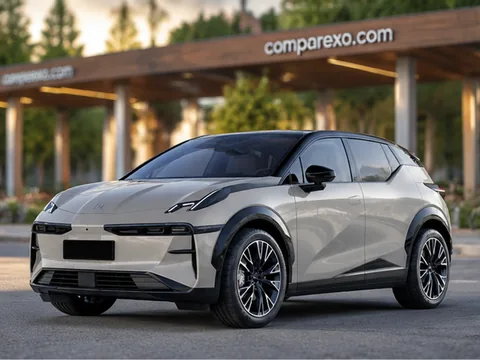
Tesla Model S at a glance
The Model S is a full-size, four-door premium electric sedan that Tesla builds with a liftback body. It has run as one continuous generation since 2012, offered across 106 trim variants and in markets that include the USA, Europe, China and Japan. Rather than naming a successor, Tesla developed the car through ongoing product iterations, which is why the range stretches from early 85-kWh cars to the tri-motor Plaid. Owners rate it 9.1 out of 10 from 78 votes.
Tesla unveiled it in 2009 as a premium sedan designed from the ground up around electric-vehicle architecture, and customer deliveries began in June 2012. It was the company's first fully in-house-developed model after the Roadster, and it took the 2013 Motor Trend Car of the Year award by a unanimous panel — the first electric car to win and the first unanimous selection. Assembly took place at the Fremont Factory in Fremont, California, where the final cars left the line in May 2026 as Tesla ended the model.
One generation, two major updates
The catalog lists a single generation running from 2012 onward with two facelifts, which matches how Tesla handled the car: a long sequence of continuous updates instead of a clean break into a new-generation code. The 2021 revision was the most substantial, arriving alongside the Plaid, whose deliveries began that year. At the end of production Tesla announced a limited Signature Edition.
Configuration changed considerably along the way. The early line-up included 40-, 60- and 85-kWh versions, among them the Signature and Signature Performance editions, followed by the dual-motor 85D and P85D. Later phases brought the 100D and P100D, before the Plaid set the current performance benchmark.
Electric performance and range
Every Model S is electric. Power reaches the road through a single-speed reduction gear and either rear- or all-wheel drive; dual-motor cars control front- and rear-axle torque independently, while the Plaid's three motors add torque vectoring and a rated 1,020 hp. Acceleration from 0 to 100 km/h takes between 2.1 and 6.2 s depending on the version, and top speed ranges from 190 to 322 km/h.
Electric range spans 340 to 840 km across the trims, a spread that reflects the different battery sizes offered over the car's life. A low-mounted battery and a rigid structure keep the center of gravity down, and aluminum forms most of the body and chassis.
Practicality and dimensions
The liftback body means a hatch rather than a separate trunk lid, and luggage volume is quoted at 709 to 793 l depending on the version. Length sits between 4970 and 5021 mm, with seating for five. The dedicated electric platform packages the battery, motor and powertrain components compactly inside the frame — an architecture Tesla also adapted for the Model X.
Those proportions make the car a genuine long-distance four-door rather than a tight performance special, and the low center of gravity shows in how planted it feels at speed. Cabin space and cargo flexibility vary only slightly across the trim ladder, so the real differences sit in the drivetrain.
Rivals and who it suits
Cross-shopping usually starts with the Porsche Panamera among large premium four-doors, and continues inside Tesla's own range with the Model 3 and Model X. The Zeekr X, Ford Kuga, Voyah Dream and Toyota C+pod also appear among the alternatives listed for comparison.
The Model S suits drivers who want a large electric sedan with generous luggage capacity and a wide performance window, from a relaxed rear-drive car to the 1,020 hp three-motor Plaid. Compare trims carefully: the gaps in range, drivetrain and acceleration between early and late cars are substantial.


















































































































 Washing machines
 Fridges
 Robot vacuums
 Portable power stations
 Vacuum cleaners
 Air fryers
 Coffee machines
 Dishwashers
 Portable air conditioners
 Tumble dryers
 Pressure cookers
 Bean-to-cup coffee machines
 Commercial coffee machines
 Heat pumps
 Air purifiers
 Window air conditioners
 Washer dryers
 Split air conditioners
 Cassette air conditioners
 Air conditioners