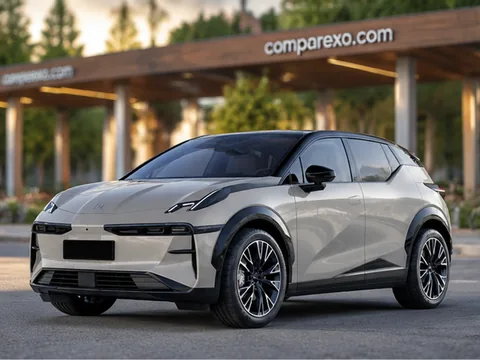
A compact electric SUV coupé
The smart #3 is an all-electric compact SUV coupé, positioned as a premium proposition in the small electric segment. It is the lower-roofed, sportier counterpart to the smart #1, which means a more swept roofline and a shape that leans towards a coupé rather than a boxy utility vehicle.
Five seats, an SUV body style and an overall length of 4400 mm place it firmly in the compact class, while output across the range runs from 272 to 428 hp. The model is currently listed with 14 trims and a single generation.
One generation, in production since 2023
Generation 1 carries the internal code HC11 and has been built since 2023, with no facelift so far and production still running. It was announced in March 2023 as the second model of smart's renewed line-up, and it had its world premiere in Shanghai on 17 April 2023, during the brand's 25th-anniversary year.
The European premiere followed at IAA Mobility in September 2023, with sales in Europe planned for early 2024. The two main markets are China and Europe, and the model has remained the same first generation throughout.
Platform, power and range
The #3 rides on Geely's SEA electric-vehicle architecture, an underpinning also reported as shared with the Volvo EX30 and used across the renewed smart family. The package brings a 2,785 mm wheelbase and a drag coefficient of 0.27, both of which shape the cabin space and the efficiency side of the equation. Assembly takes place at Geely's Xi'an plant in Shaanxi, China.
Two drivetrain layouts are offered. Rear-wheel drive with a single motor covers the mainstream versions, while the dual-motor all-wheel-drive BRABUS sits at the top of the tree with 315 kW and a claimed 0–100 km/h time of 3.7 seconds. Across the lineup the sprint takes 3.6 to 5.8 s and the top speed is capped at 180 km/h, with a single-speed reduction gear handling transmission duties.
Electric range spans 415 to 580 km depending on the version, so the difference between an entry trim and a long-range or performance derivative is substantial. Market lineups include Pro, Pro+, Premium and BRABUS, and a 25th Anniversary Edition has been offered in some regions, though battery capacities and trim availability vary by market.
Practicality, dimensions and reception
With its 4400 mm length and five-seat cabin, the #3 is sized for urban use without giving up rear passenger room, and the coupé roofline is the main visual and spatial compromise against the smart #1. Design credentials are backed by a 2024 iF Design Award and a Red Dot Award: Product Design.
China-only sales figures reported for the model show 8,208 units in 2023, 9,538 in 2024 and 4,428 in 2025. Owner feedback collected so far gives the car 8.8 out of 10.
Who it suits
The #3 fits drivers who want compact electric running costs and a five-seat SUV footprint, but prefer a lower, more athletic silhouette than a conventional small crossover offers. The rear-wheel-drive versions answer the everyday brief, while the all-wheel-drive BRABUS exists for those who prioritise acceleration over maximum range.
Anyone comparing within the family should place it directly against the smart #1, which trades some of that styling for a taller body. Checking the trim list carefully matters here, because power, drivetrain and range move considerably from Pro to BRABUS, and the gap between 415 and 580 km of range is decided at the configuration stage rather than on the road.


















































































































 Washing machines
 Fridges
 Robot vacuums
 Portable power stations
 Vacuum cleaners
 Air fryers
 Coffee machines
 Dishwashers
 Portable air conditioners
 Tumble dryers
 Pressure cookers
 Bean-to-cup coffee machines
 Commercial coffee machines
 Heat pumps
 Air purifiers
 Window air conditioners
 Washer dryers
 Split air conditioners
 Cassette air conditioners
 Air conditioners