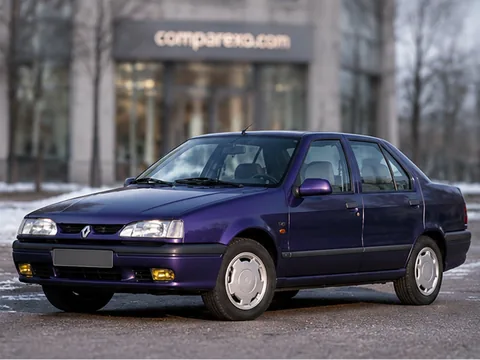
Origin and identity
Renault is a French car brand with roots in 1898, the year Renault Group uses to date its pioneering of mobility. The company is headquartered in Boulogne-Billancourt, France, and sits inside Renault Group, a mainstream marque rather than a niche or luxury player.
Its stated promise is "innovation that serves everyone", a phrase that explains how the range is built: electrification and technology pushed down into everyday cars instead of being reserved for flagship models. For a brand of this size, that idea shapes everything from small hatchbacks to family SUVs.
More than a century of models
The archive is long. The 4 (1961–1994) and the R5 (1972–1996) belong to the earliest chapter, followed by cars such as the 14 (1976–1983), 18 (1977–1989), 25 (1984–1992) and Safrane (1992–2016). The Twingo (1992–2019) stayed in production for close to three decades, while the Laguna (1993–2015) carried the family segment.
Later departures include the Logan (2004–2022), Sandero (2009–2022) and Sandero Stepway (2010–2022), alongside the electric Twizy (2012–2021), ZOE (2012–2024) and Kangoo Z.E. (2013–2020). Commercial vehicles have their own timeline, with the Master, Magnum, Midliner, Kerax and Premium among the names that have left the line-up.
Hybrid and electric line-ups
Electrification now carries much of the brand's identity, and Renault Group describes Renault as a pioneer of electric mobility in Europe. The range splits between full-hybrid models — Clio, Captur, Arkana, Austral, Espace and Rafale — and fully electric ones, among them the Renault 5, Renault 4, Mégane, Scénic and Twingo.
The International Game Plan 2027 sets out accelerated development around five strategic hubs: Brazil, Turkey, South Korea, Morocco and India. That geographic spread matters when comparing versions, because the same nameplate can carry different engines and equipment from one market to the next.
The current range
The brand lists 69 models today, from city-sized cars such as the Clio, Lutecia, KWID and Twingo, through crossovers including the Captur, Duster, Arkana, Symbioz and Koleos, up to the larger Espace, Grand Scenic, Austral, Rafale and Grand Koleos. Dedicated electric entries cover the 5 E-Tech, 4 E-Tech and City K-ZE.
Beyond passenger cars, the line-up reaches into vans and pickups with the Express, Kangoo, Trafic and Alaskan. Comparing trims is where most of the work lies: 6,948 versions are listed across the range, and equipment differences between them often matter more than the badge on the tailgate.
How owners rate the brand
Owner feedback gathered for Renault averages 8.3 out of 10. The score comes from everyday use rather than first-drive reviews, which makes it a practical anchor when weighing a Clio against a Captur, or an older Laguna against a newer hybrid.
















































































































 Renault: all models, specs and prices


 Washing machines
 Fridges
 Robot vacuums
 Portable power stations
 Vacuum cleaners
 Air fryers
 Coffee machines
 Dishwashers
 Portable air conditioners
 Tumble dryers
 Pressure cookers
 Bean-to-cup coffee machines
 Commercial coffee machines
 Heat pumps
 Air purifiers
 Window air conditioners
 Washer dryers
 Split air conditioners
 Cassette air conditioners
 Air conditioners