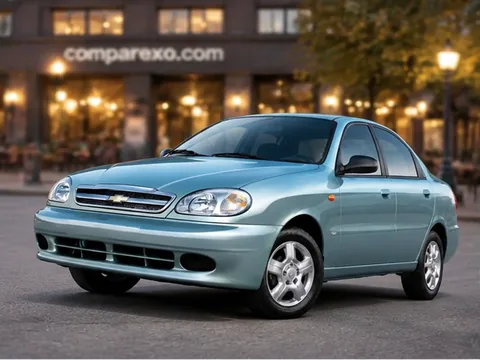
A Chinese make rooted in Chongqing
Lifan is a Chinese passenger-car brand founded in 1992 in Chongqing, the same city where the company keeps its headquarters. Founder Yin Mingshan launched the business in vehicle parts, and that industrial grounding in one of China's largest manufacturing centres shaped the character of everything that came after.
Before automobiles, the firm worked in motorcycle repair and manufacturing. That two-wheeled apprenticeship gave it a practical, cost-conscious engineering culture that carried straight into its car programme.
From motorcycles to passenger cars
Lifan moved into passenger cars during the 2000s, and its first car of that kind, the 520, arrived in 2006. The step was ambitious for a company with a motorcycle background, and it set the template for a range built around small, affordable vehicles.
A genuine milestone followed in 2010, when the company listed on the Shanghai A-share market as the first privately owned Chinese passenger-car maker to do so. That status said as much about the brand's scale as about its ambition.
The later chapter was harder. Operational and debt difficulties led to judicial restructuring in 2020, with Geely taking part as an investor. The corporate entity was renamed Lifan Technology in 2021 and Qianli Technology in 2025, as the business turned toward new-energy and intelligent-mobility activities.
The models that carry the name
The catalog holds 13 Lifan models spread across 119 trims, and all of them belong to the brand's past rather than its present line-up. The earliest entry is the Breez, sold from 2007 to 2012, which shows how quickly the range expanded after the 520.
Sedans dominate the middle years: the Solano ran from 2010 to 2022 and became one of the longest-lived names, joined by the Smily (2010–2017), the Cebrium (2014–2017), the Celliya (2014–2016) and the Murman (2014–2022). The SUVs arrived a little later, with the X60 (2012–2022) opening the way for the X50, X70 and X80, all of which ended production in 2022.
The remaining entries show the range reaching into other shapes: the Foison from 2016, the Myway (2016–2020), and the 650 EV (2016–2020), an electric model that anticipated the direction the company would later take as a business.
Accessible cars and a strong owner score
Lifan built its reputation as a privately owned mass-market manufacturer, known for accessible small passenger cars and for wide overseas exports. It was a mainstream, export-oriented maker rather than a luxury marque, and its cars were bought on value and practicality rather than on prestige.
Owners back that reading. The brand holds an average rating of 8.4 out of 10 across the catalog, a solid score for a maker whose cars competed at the affordable end of the market.
For anyone comparing Lifan generations, the useful exercise is to line up a Solano against an X60 or place the Cebrium beside the Celliya, watching how the specifications and trim counts shifted between the sedan years and the SUV years.


















































































































 Washing machines
 Fridges
 Robot vacuums
 Portable power stations
 Vacuum cleaners
 Air fryers
 Coffee machines
 Dishwashers
 Portable air conditioners
 Tumble dryers
 Pressure cookers
 Bean-to-cup coffee machines
 Commercial coffee machines
 Heat pumps
 Air purifiers
 Window air conditioners
 Washer dryers
 Split air conditioners
 Cassette air conditioners
 Air conditioners