The model at a glance
The Dodge Durango is a mid-size SUV with a three-row layout, built for families who still want muscle under the hood. Dodge launched it for the 1998 model year as a traditional truck-based sport/utility, and the nameplate has stayed in the range ever since, spanning three generations and 207 trims. Owners rate it 8.7 out of 10 across 109 votes.
Its positioning has shifted over the years. The Durango began as a body-on-frame SUV derived from the Dodge Dakota pickup and evolved into a unibody, crossover-style three-row model marketed as Dodge's performance-oriented family hauler. In 2021, with the Journey discontinued, it became Dodge's only SUV.
Generations and evolution
Generation 1 (DN) ran from 1997 to 2003 and was sold in the USA. Truck-based and derived from the Dakota, it shared its front end, instrument panel and front seats with the pickup, and could seat up to seven or eight. Owner rating sits at 8.4.
Generation 2 (ND) followed from 2003 to 2009 with one facelift and a rating of 8.7. It grew 7 in longer, 2 in wider and 3 in taller, added an available eight-seat three-row bench and the 5.7 L HEMI V8, and was also sold as the Chrysler Aspen. A two-mode hybrid with two 87 hp electric motors arrived for 2009, though roughly 800 hybrids were built before the system was dropped.
Generation 3 (WD) entered production on 14 December 2010 and arrived as a 2011 model, after a year in which no Durango was built at all. It moved to unibody construction on the platform shared with the Jeep Grand Cherokee WK2, with a slightly longer wheelbase that opened the way for three-row seating. Two facelifts, in 2014 and 2021, keep it current, and it remains in production today — one of the longest-running designs on sale. Its owner rating is the highest of the three, at 9.0.
Engines, performance and efficiency
Engine sizes run from 3.6 to 6.4 L, with output spanning 174 to 710 hp. Gasoline dominates, with gasoline/LPG versions also offered. Acceleration from 0 to 100 km/h takes between 3.7 and 13.2 s, top speed reaches 173 to 285 km/h, and fuel consumption ranges from 10.7 to 23.5 l/100 km depending on the engine.
Drive goes to the rear wheels or to all four, through automatic and CVT transmissions; since 2014 every Durango uses a ZF eight-speed automatic. Notable versions trace the model's arc: Magnum V8s in the SLT-era first generation, the 5.7 L HEMI V8 in the second, then Citadel and R/T trims in the third, SRT with a 475-hp 6.4 L HEMI from 2018, and the SRT Hellcat with a 710-hp supercharged 6.2 L V8, revived for 2023.
Practicality and dimensions
Every Durango is an SUV, with seating for 5 to 7 depending on configuration. Overall length falls between 4910 and 5110 mm, and the trunk holds 487 to 1936 l, so the third row folds away into serious cargo space.
Towing has been part of the pitch since the start, at up to 7,500 lb in the first generation and 8,700 lb for the SRT Hellcat.
Rivals and who it suits
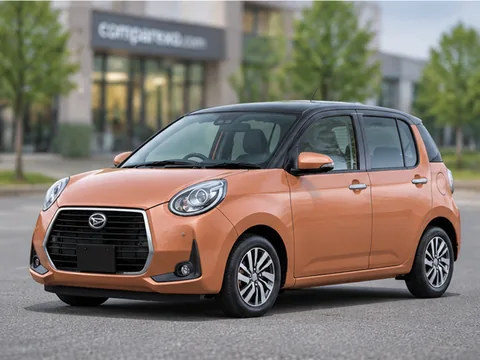
Shoppers cross-shop the Durango against the Jeep Grand Cherokee, with which the current generation shares its platform, along with the Ford Explorer, Dodge Journey and Dodge Ram. Smaller models such as the Daihatsu Boon and Ford Focus also appear in the comparison set.
The Durango suits buyers who need three rows and genuine towing capacity but do not want a bland family hauler. The Citadel and R/T trims lean toward luxury and muscle respectively, while the SRT and SRT Hellcat versions push it firmly into performance-SUV territory. More than two million have been sold since 1998, which says plenty about how well that mix has landed.


















































































































 Washing machines
 Fridges
 Robot vacuums
 Portable power stations
 Vacuum cleaners
 Air fryers
 Coffee machines
 Dishwashers
 Portable air conditioners
 Tumble dryers
 Pressure cookers
 Bean-to-cup coffee machines
 Commercial coffee machines
 Heat pumps
 Air purifiers
 Window air conditioners
 Washer dryers
 Split air conditioners
 Cassette air conditioners
 Air conditioners